Weld Services
Engineering Weld Services
Maintenance welding for engineering and general industrial components, built on MAGNA's maintenance-specific alloys.
25+ years of maintenance welding
Matched to your base material
Fewer repeat weld failures
Recognise the Problem
Components across your plant — cast iron, cast steel, gear teeth, or a damaged chassis — need repair welding, and past repairs on similar components haven't held up.
A previous weld repair failed under load or pressure, without much warning beforehand.
You've noticed porosity, cracking, or brittleness in past repair welds.
You're stocking, or trying to stock, a wide range of standard electrodes to cover different base materials rather than a maintenance-specific solution.
Here's how we approach it in practice — what we look at, how we assess the damage, and the kind of repair or rebuild that follows:
What We Do
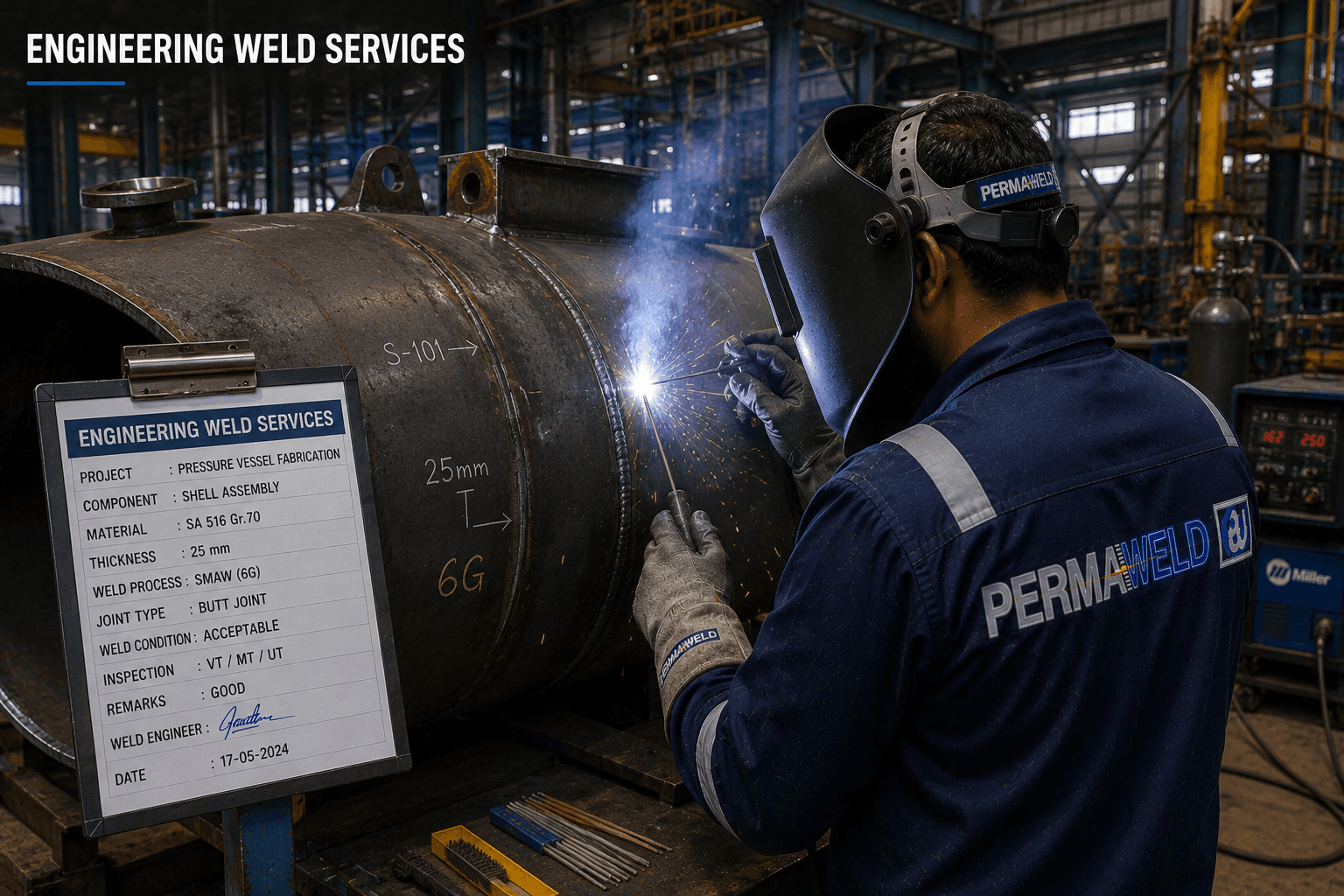
Maintenance welding across engineering components — cast iron, cast steel, gear teeth, and damaged chassis.
What We Address
The porosity, cracking, and brittleness that standard production electrodes cause when used for repair welding.
How It Helps
A weld that matches the base material's stress and strain demands, instead of failing exactly when the plant can least afford it.
Our Advantage
MAGNA's maintenance-specific alloys, formulated for the higher strength repair welding actually requires.
Not all welds are equal, and in maintenance, the wrong one tends to fail exactly when a plant can least afford it — usually under load, under pressure, and without much warning beforehand.
For over 25 years, Permaweld has provided maintenance welding services for engineering components across heavy industry, using alloys engineered specifically for repair and rebuild — not new production, because the demands on a repaired part are fundamentally different from the demands on a freshly manufactured one.
Standard welding electrodes assume the electrode material and base material are the same — an assumption that breaks down in maintenance welding. Contamination from sulphur, phosphorus, and carbon in the electrode creates porosity and cracking in the base material; phosphorus specifically causes brittleness at low arc temperatures, and oxygen contamination reduces impact toughness and tensile strength. Standard electrodes also need pre-heating because they absorb moisture from the atmosphere, and their coating has a short shelf life that can peel during storage, degrading weld properties before the electrode is even used.
Maintenance work also means welding across very different base materials in the same plant — cast iron, cast steel, gear teeth, damaged chassis — which normally means stocking a wide range of electrodes. MAGNA's maintenance-specific alloys are formulated for the higher strength that stressed, strained base material demands, giving a longer and more reliable repair life across all of it, so a plant doesn't need a different specialist alloy on hand for every type of component it might need to repair.
Recommended Next Step
An assessment of the base material and failure mode involved, and the repair approach matched to the stress and strain that component actually sees — information you can use to decide the next step.
Discuss My PlantWhere this service is commonly used
Related weld services
Engineering Weld Services — Frequently Asked Questions
What is engineering maintenance welding?
It's maintenance welding for engineering and general industrial components — cast iron, cast steel, gear teeth, damaged chassis — using MAGNA's maintenance-specific alloys, provided by Permaweld for over 25 years.
Why does standard welding fail in maintenance repair?
Standard electrodes assume the electrode and base material match, an assumption that breaks down in repair welding; contamination and moisture absorption can cause porosity, cracking, and brittleness.
How is engineering weld repair performed?
Using alloys engineered specifically for repair and rebuild rather than new production, formulated for the higher strength that stressed, strained base material demands.
Which industries use this service?
It's used across heavy industry and engineering component manufacturing where maintenance welding across varied base materials is routine.
What information does the customer receive?
A longer, more reliable repair life across varied base materials in the same plant, instead of repeat weld failures.